
Updated November 2026. By the Tappezzeria Radogna workshop, Isernia, Italy, since 1950.
In short: handmade work is becoming rare, and that is exactly why it is worth more. In our workshop in Isernia, measuring, cutting, sewing, upholstery and installation are still done by hand and to measure, as they have been since 1950. For larger projects we work with our own team of architects, interior designers and carpenters, in Italy and abroad.
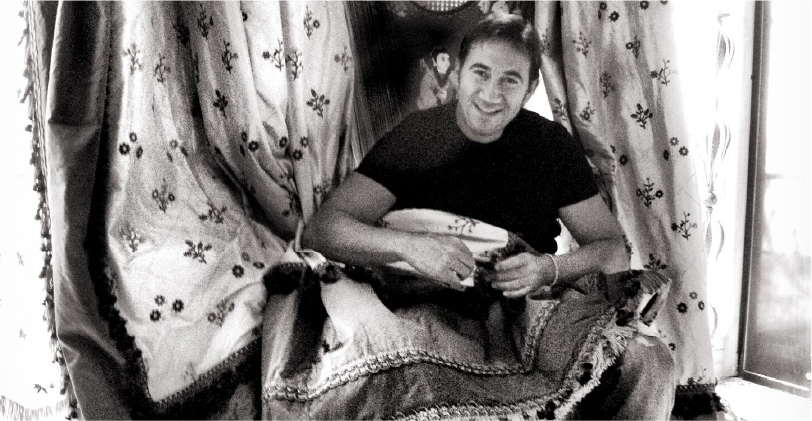
Our workshop in Isernia works much as it did in 1950, when Tappezzeria Radogna opened. The machines have changed and so have the fabrics, but a curtain is still measured by a person, cut by a person and sewn by a person. The same goes for an armchair to be re-covered: it is stripped, the frame is checked, the padding is redone and the fabric is stretched by hand.
For three generations this was simply the normal way of working. In recent years we have noticed that it is becoming rare.
Why is handmade work disappearing?
Anyone over forty remembers that every town had an upholsterer, a seamstress, a carpenter. Many of those workshops have closed without finding anyone to carry them on. The reasons are well known: standard curtains and sofas are cheap and arrive in a few days, and the craft can only be learned by working for years next to someone who knows it.
The result is that know-how is getting thinner. Fabric is chosen from an online catalogue, curtains arrive in fixed sizes and are shortened with iron-on hem tape, sofas are replaced instead of re-covered.
There is nothing wrong with standard products. The problem comes when the measurements really matter: when a window is out of square, when a hotel needs forty rooms coordinated in flame-retardant fabrics, when an architect designs a seat that doesn’t exist on the market. That is when you need someone who can work the material, and there are fewer and fewer of them.
Why does what is rare become more valuable?
When a skill becomes rare, those who look for it are willing to value it more. It happens with watchmaking, tailoring and violin making. It is happening with soft furnishings.
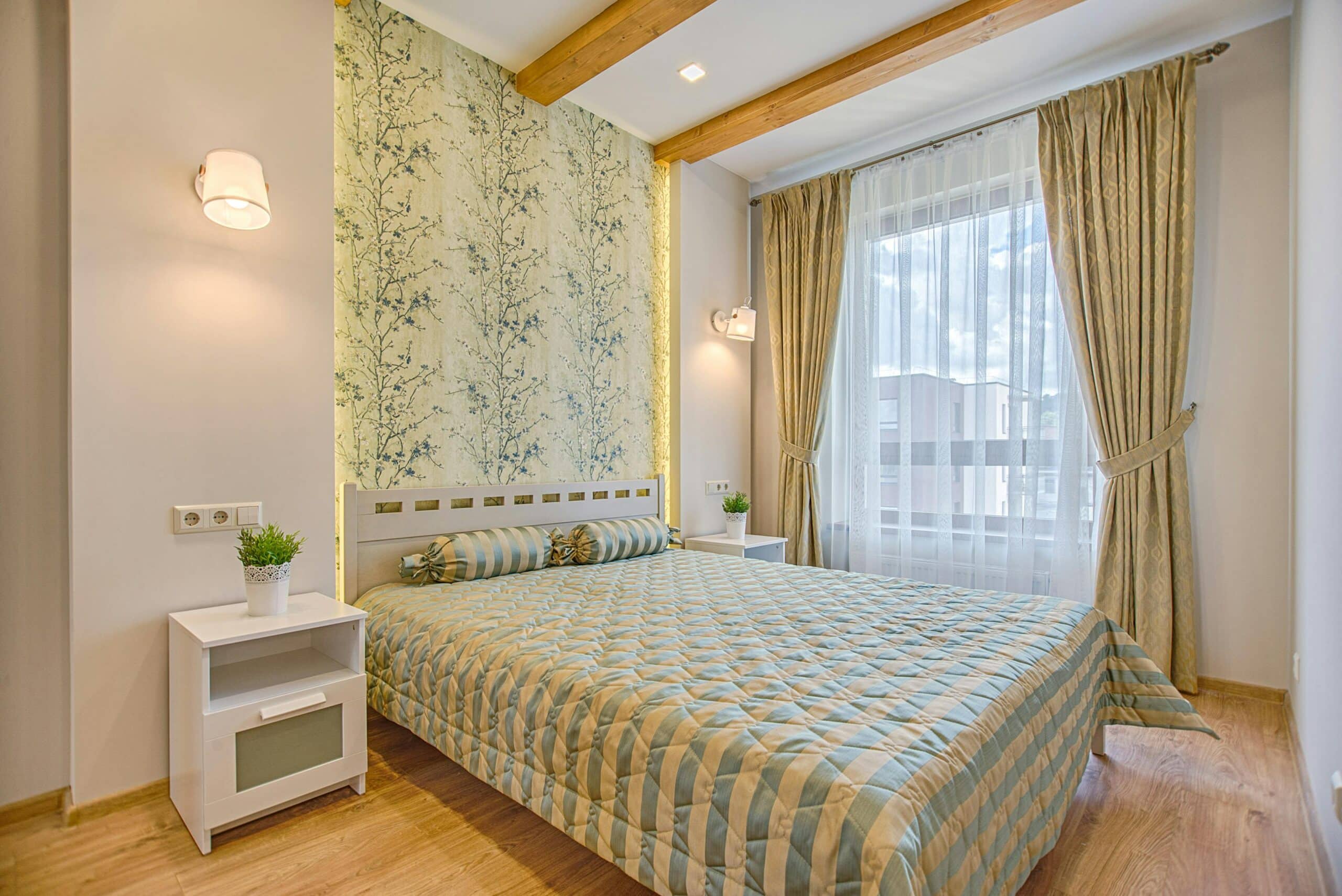
We see it in the requests we receive. More and more often, people don’t want “a curtain”, they want that curtain for that room: the fabric chosen by touching it, the right fold for the way the light falls, the hand-sewn hem you can’t see. These are details that have no place in mass production, and in a home or a hotel they make the difference between a furnished room and a cared-for one.
Abroad this value has long been recognised. For many international clients, “Made in Italy” in interiors means exactly this: an object designed for a specific place and made by skilled hands. It is a label that has to be earned every time, through the work.
What we still do by hand in our workshop
Every step that decides the final quality is done by hand, or with machines guided by hand:
- Measuring. We do the survey ourselves, on site. We take the real measurements and check walls, ceilings, tracks and fixings.
- Cutting. Every panel is cut on the bench, following the grain of the fabric and the pattern repeat, so that patterns match from one panel to the next.
- Making up. Our seamstresses sew pleats, hems, linings and borders. The pleats of a wave or pinch-pleat curtain are prepared by hand before sewing. See our made-to-measure curtains.
- Upholstery. Chairs, armchairs, sofas and headboards are stripped, repaired, padded and covered by hand, stitch by stitch. See our upholstery service.
- Installation. We install with our own team. A perfect curtain badly fitted is still a badly fitted curtain.
Everything is made to measure: we have no stock of ready-made curtains. Every job starts from a space and a person.
A team for larger projects
For larger jobs, such as a hotel, a restaurant, a villa or an entire building, we work with our own team: architects, interior designers, carpenters and installers who have worked with us for years. This lets us follow a project from concept to the last curtain hung, with one point of contact.
It is the model we use for contract furnishings: certified fabrics for public spaces, samples, prototypes, production in our workshop and installation coordinated with the other trades on site.
Do you work outside Italy?
Yes. Working by hand doesn’t mean working only close to home. We have made very large curtains for a project in Asia, with our team on site for a month. Several Italian furniture companies have commissioned us for work for the United States, Switzerland, France and other countries: we make to measure, in our workshop, what then reaches the end client.
If you are an architecture studio, a hotel or a private client furnishing a home in Italy or elsewhere in Europe, and you are looking for a workshop to make bespoke curtains, drapery, upholstery and padded furniture, let’s talk. Send us drawings, measurements or just a few photos of the space: we will tell you how we would do it, with which materials and in what timeframe.
Request a consultation for your project →
Frequently asked questions
What is the difference between a made-to-measure curtain and a shortened standard one?
A made-to-measure curtain is cut and made up for that window: height, width, fullness and type of fixing are decided in advance. A shortened standard curtain has proportions designed for a different size and a hem redone afterwards.
Do you work outside Italy?
Yes, for contract and residential projects of a certain size. We have worked in Asia, with a month on site for very large curtains, and made supplies for projects in the United States, Switzerland and France on behalf of Italian companies. We produce in our workshop in Isernia and organise shipping, travel and installation with our own team.
Can you work on a project designed by another architect?
Yes, it is one of the most common cases in contract work. We follow the design, suggest technical solutions where useful and make prototypes or samples before production.